
TiriVelo
Creating a Trusted Pet Care Experience for Busy Pet Owners
Situation
Pet owners often juggle multiple apps and methods to manage appointments, records, and communication with care providers.
Role
UI Designs | Component Library | Information Architecture
Challenge
Design a centralized owner experience that makes managing pet care simple, organized, and stress-free.
Timeline
4 Weeks | 2025
Opportunity
Create a seamless experience that helps pet owners with their pet care and well-being while improving communication with service providers.
Team
2 Designers, 2 Developers & Founder
Coordinating Across Design Teams
With multiple teams designing different parts of the platform simultaneously, consistency became just as important as visual design. I established a shared collaboration workflow in Figma, coordinated regular design reviews, and initiated working sessions between the Owner and Provider teams to align shared components, interaction patterns, and design decisions before development.
Impact:
Created a single source of truth for design assets and documentation, streamlining collaboration and handoff
Kept teams aligned throughout the project, reducing rework and conflicting design decisions
Delivered a cohesive product experience by minimizing inconsistencies between the owner and provider interfaces
Designing the Owner Experience
Starting from mid-fidelity wireframes, our team designed the first high-fidelity Owner experience. As additional requirements arrived midway through the project, I revisited earlier screens, refined user flows, and ensured a consistent experience across onboarding, booking, pet profiles, and messaging.


Building the Foundation
As the interface expanded, I helped establish an early design system to support future growth. This included typography, spacing, reusable components, color standards, and documentation for recurring UI patterns.


Filling Product Gaps
While connecting the full Owner journey, we uncovered several missing states, transitions, and supporting features that weren't represented in the original wireframes. I designed additional screens to complete the user journey, support the platforms two-sided experience, and explore opportunities beyond the MVP.


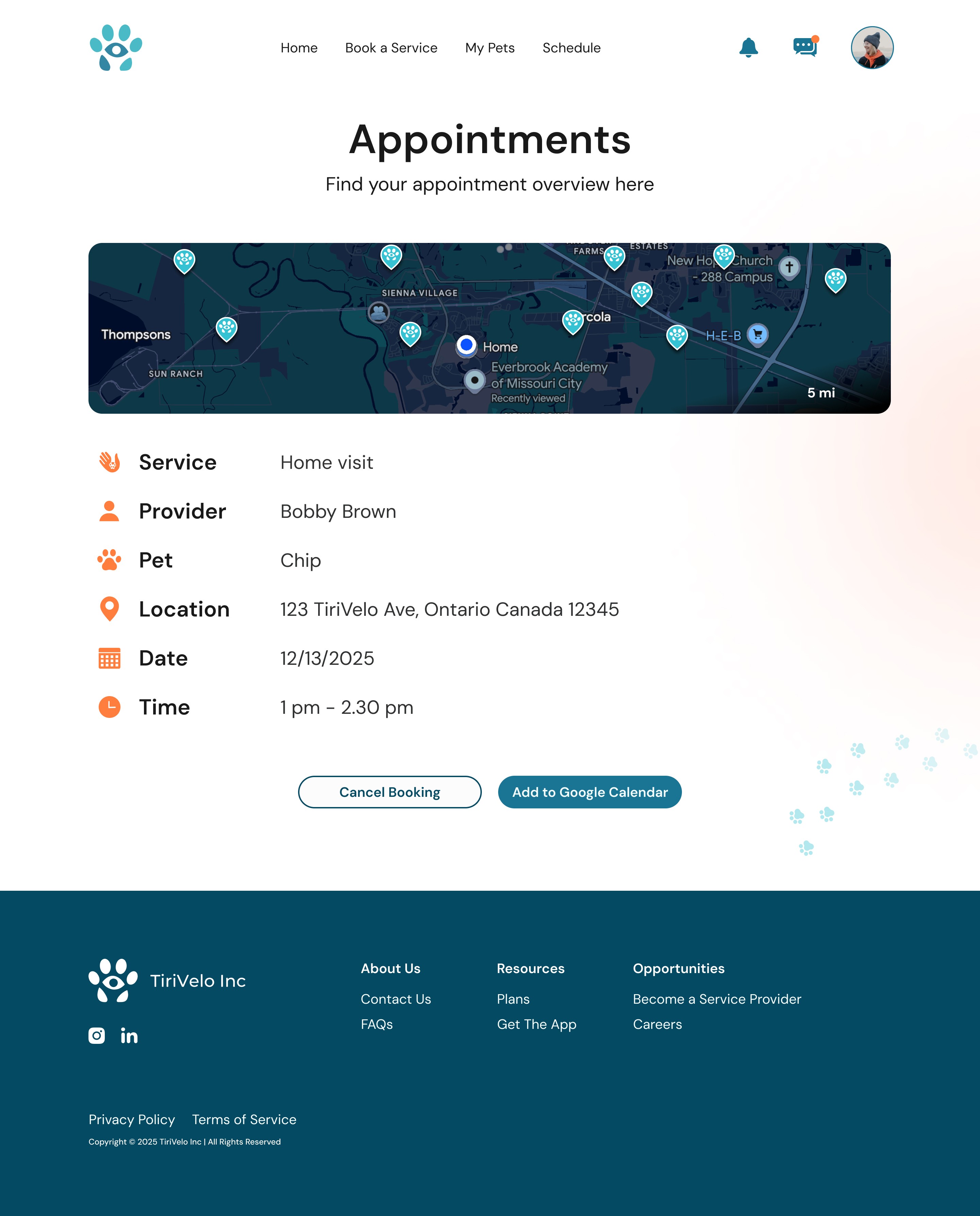
Profile States: Designed Empty, Owner, and Provider views to support permissions across the user journey.
Become a Provider: Added a pre-account entry point that introduces the Provider experience.
Appointments: Expanded the appointment with a calendar view and detailed appointment pages.
Testing & Iteration
I prepared the prototype for Maze usability testing, reviewed every session, and synthesized recurring usability issues into actionable design improvements.
Objective: Add Personal Details about Yourself
77.8%
Success Rate
22.2%
Drop-Off Rate
10.4%
Misclick Rate
Observed Navigation Paths: Many users entered pet profiles first, indicating the owner profile entry point lacked visibility.

Iterating on the Onboarding Experience
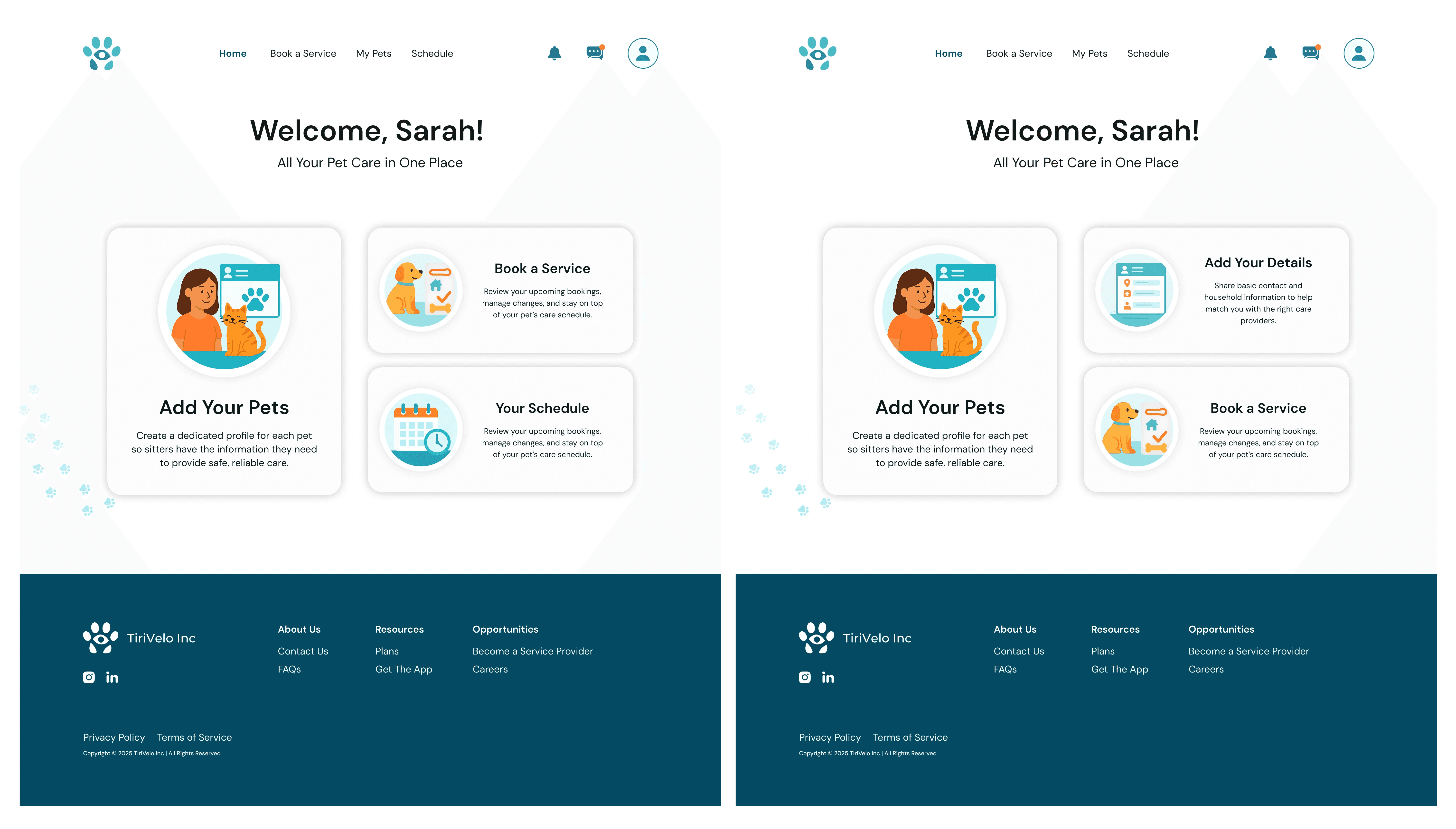
Usability testing showed that many first-time users skipped their own profile details and went directly to adding a pet.
In response, we replaced the "Your Schedule" card with "Add Your Details" and moved "Book a Service" below it, reinforcing that owners should complete both their personal and pet information before booking care.
Final Reflection
This project strengthened my ability to design within ambiguity, collaborate across distributed teams, and balance visual consistency with evolving product requirements. More than designing screens, I learned how strong communication, shared systems, and continuous iteration shape successful product experiences.
Reflection
What I learned from working with a real client:
Designing for a real client pushed me to balance ideal UX with timelines, evolving requirements, and stakeholder needs—strengthening my ability to make thoughtful tradeoffs without losing sight of accessibility or user trust.
How Accessibility shaped design confidence:
This project reinforced that accessibility directly builds trust. Clear language, readable layouts, and reduced cognitive load helped pet owners feel more confident making high-stakes care decisions.
Creating work that others can build on:
Knowing other teams would continue the work shifted my focus toward clarity and consistency—designing a strong foundation that could evolve without losing its core intent.